Stories, insights, and culture from the world of Japanese language and Japan.
Textbooks teach you "where is the station?" Real life teaches you everything else. Here are five expressions that come up constantly in Japanese — and what they actually mean beneath the translation.
Literally "you must be tired" — but used as a greeting between colleagues, an acknowledgement of someone's effort, and a way of signing off at the end of the workday. There's no clean English equivalent. It carries warmth, respect, and solidarity in a single phrase.
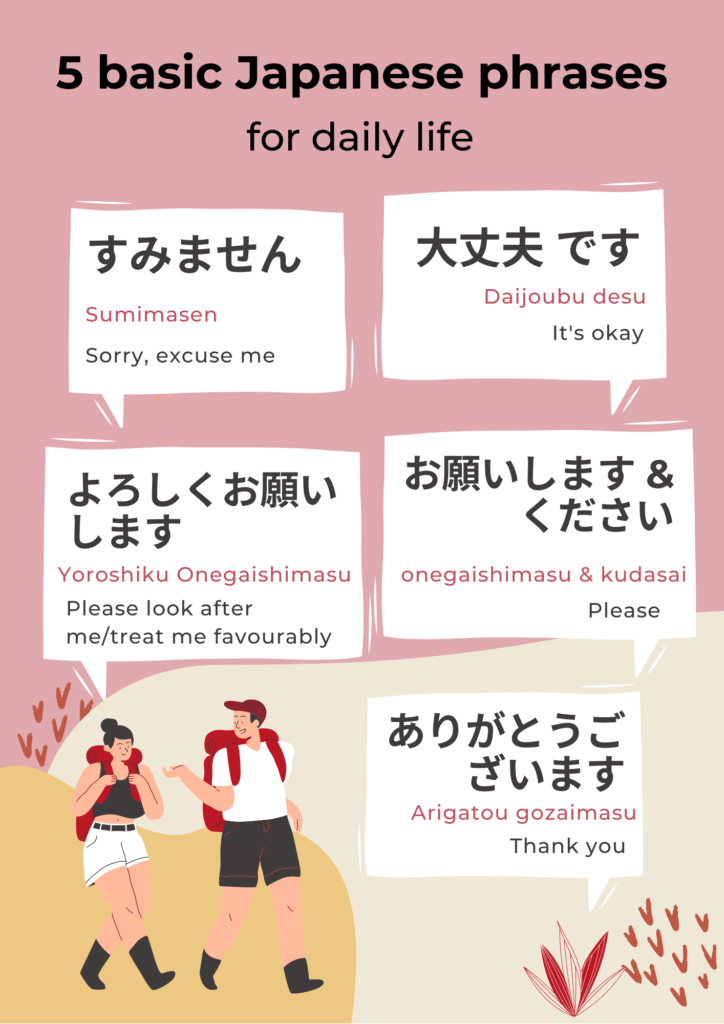
The phrase that stumps every beginner. It means please treat me well, I'm counting on you, nice to meet you, and thank you in advance — all depending on context. Master this one and you'll sound immediately more natural.
Excuse me, I'm sorry, and could I get your attention? — all in one. In a restaurant, on the street, after bumping into someone. Sumimasen is the Swiss Army knife of Japanese social interaction.
"I see," "that makes sense," "ah, right." A small word that signals you're following the conversation. Japanese communication often relies on these back-channel cues — and naruhodo is the most satisfying of them.
"It can't be helped." A quiet acceptance of circumstances outside your control. It's not resignation — it's a cultural posture. Understanding shōganai gives you a window into how Japan processes difficulty with composure.